You’ve spent years building real skills. You collaborated with teams, solved problems under pressure, learned new tools, and figured out how to communicate across different groups of people. Now you’re making a move into tech, and suddenly it can feel like none of that counts. It does. You just have to learn how to say
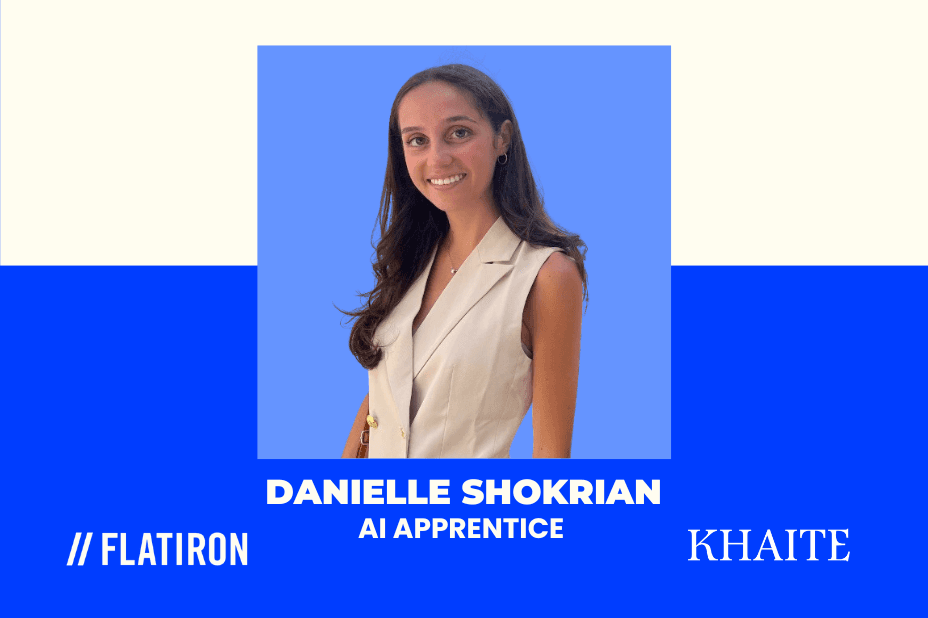
Meet Danielle Shokrian Danielle is a student in Flatiron’s Accelerated AI Engineering Immersive program and an AI Apprentice at Khaite, a luxury fashion brand in New York City. She is currently working on AI and automation, building apps that help streamline workflows and processes. In her interview, she shares her journey from a music education
The first year in tech feels like momentum. You are writing code that ships and learning faster than you ever have. Every week adds something new. It is easy to mistake that pace for progress. There is a difference between accumulating exposure and building leverage. For most junior engineers, the gap between those two things
Your work-integrated interview is the first step in a structured pathway to real-world experience and measurable career outcomes. Flatiron School supports technologists and organizations at every stage, from first job to career acceleration to workforce transformation. Whether you’re starting your first career in tech or repositioning as an experienced developer in a changing market, this
Automation and AI are handling more basic coding tasks, pushing developers to continuously elevate their skills. A major force reshaping the landscape is the rise of AI and automation, which is changing the nature of software jobs. The role of AI is augmenting rather than fully replacing developers, especially experienced ones. That shift changes what
If you’re thinking about transitioning into tech, you’ve probably heard some version of the same advice: learn to code, build projects, start from scratch. The narrative assumes you’re beginning at zero, but that assumption doesn’t hold for the growing number of professionals who bring years of workplace experience to their tech education. The gap isn’t
You do not need to write code to benefit from AI. You do not need a CS degree, a background in data, or years of technical experience. What you need is the willingness to recognize that the job market is shifting and the decision to move with it before the gap becomes harder to close.
At some point, many people are ready for more. The path forward becomes a question worth pursuing seriously. You start exploring new options, searching for skills that could open doors, and considering whether a transition into a technical field like AI engineering is within reach. It is, and it starts with momentum. For career switchers
You are a working engineer or a career builder at a crossroads. Maybe you already know how to build software and want to specialize in AI. You might also be coming from a non-technical background and recognize that AI skills are becoming the differentiator between the role you have and the one you want. Either
Meet Carolyn Whelpley Carolyn is a student in Flatiron School’s Accelerated AI Engineering Immersive program. She’s working with a team to build an onboarding tool for future program engineers. In her interview, she shares what drew her back to Flatiron after completing the software engineering certificate program, how the work-integrated structure has exceeded her expectations,
You might have been Googling “how to become an AI engineer” for a while now. The results are not helping. Some articles tell you to get a computer science degree. Others say you can be job-ready in eight weeks. A few insist you need a PhD to do anything meaningful with machine learning. A lot
Meet AI Cerdan Lico Al Cerdan Lico is a student in Flatiron School Accelerated AI Engineering Immersive program, leveling up by utilizing AI to create apps and learning new tools. In his interview, he shares how a layoff became the catalyst to pivot from customer support into tech through Flatiron’s work-integrated learning program, where he
Flatiron’s new Work-Integrated Immersive programs are designed for students who want a high-bar path into building products. Our Immersive students learn through structured coursework and support while also working with an employer as a paid apprentice. The result is verified experience in shipping deliverables, collaborating in real workflows, taking feedback, and building the professional confidence
For more than a decade, coding bootcamps have opened the door to careers in technology for people who might never have imagined themselves working in the field. Flatiron School was part of that first wave. In the early 2010s, coding bootcamps emerged to solve two problems at once: companies needed more engineers than universities were